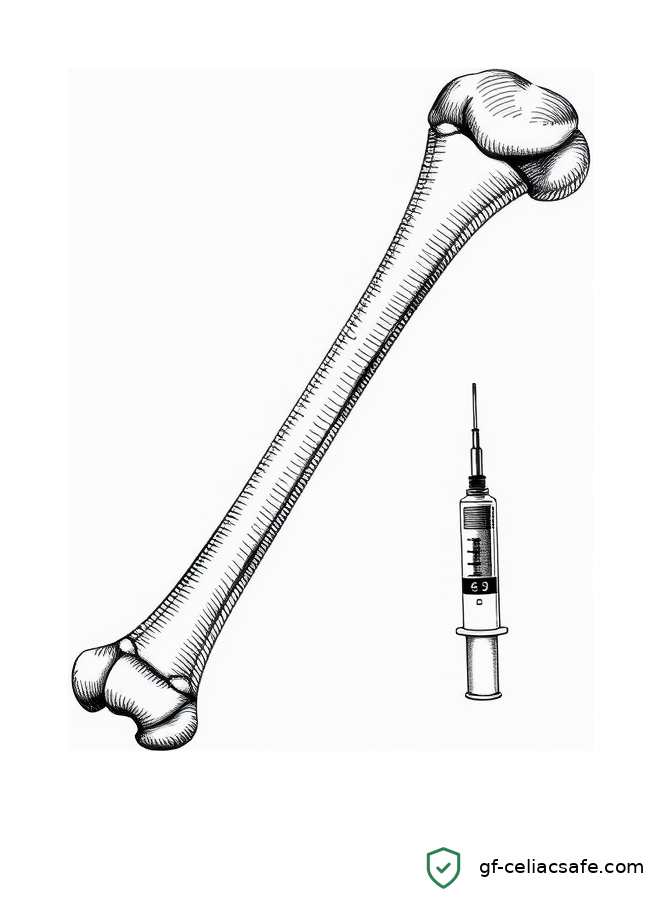
Celiac disease doesn’t stop at the gut. For many patients, the damage extends to their bones—and until now, there’s been little research on whether standard osteoporosis treatments work as well for celiac patients as they do for everyone else. A new study published in Internal and Emergency Medicine provides encouraging news: the bone-strengthening drug denosumab appears to be just as effective in celiac patients with osteoporosis as it is in the general population.
This matters because celiac patients face a double burden. The intestinal damage from gluten exposure impairs calcium and vitamin D absorption, leading to lower bone mineral density (BMD) and a significantly higher risk of fractures. For celiac families like mine, this is yet another reason to stay vigilant about the gluten-free diet—and another complication to discuss with healthcare providers.
What the Researchers Found
The study, conducted by researchers at Sapienza University of Rome, followed 15 celiac patients with osteoporosis who were at high risk for fractures. These patients were all following a strict gluten-free diet and received long-term treatment with denosumab, a medication that works by blocking a protein called RANKL that normally triggers bone breakdown.
The researchers compared these celiac patients to a control group of non-celiac osteoporotic patients matched for age, sex, body mass index, and history of fragility fractures. The key question: Would denosumab work as well in celiac patients, whose bodies have already been compromised by malabsorption?
The answer appears to be yes. The celiac patients showed comparable improvements in bone mineral density to the non-celiac controls. This is significant because it suggests that celiac disease itself doesn’t diminish the effectiveness of this particular treatment—welcome news for the many celiac patients who develop osteoporosis.
Why Celiac Patients Face Higher Osteoporosis Risk
For those unfamiliar with this connection, the link between celiac disease and bone loss is well established but often overlooked. When someone with celiac disease consumes gluten, their immune system attacks the lining of the small intestine, destroying the tiny finger-like projections called villi that absorb nutrients. Calcium and vitamin D—both critical for bone health—are among the nutrients that get shortchanged.
Even after diagnosis and transition to a gluten-free diet, bone damage can persist. Studies have shown that celiac patients have both lower bone mineral density and higher fracture rates compared to age- and sex-matched controls, a finding the Italian researchers cite in their paper. For patients diagnosed later in life or those who experienced years of symptoms before getting answers, the cumulative bone loss can be substantial.
This is something that weighs on me as a celiac parent. My son was diagnosed as a child, which in some ways is fortunate—early intervention and a strict gluten-free diet give his bones the best chance to develop normally. But I know many adults with celiac disease who spent decades undiagnosed, accumulating invisible damage that now manifests as osteoporosis or osteopenia.
Understanding Denosumab
Denosumab (sold under brand names like Prolia and Xgeva) represents a different approach to osteoporosis treatment than older medications like bisphosphonates. It’s a fully human monoclonal antibody, meaning it’s a lab-made protein designed to mimic natural antibodies. It works by binding to RANKL, a molecule that activates osteoclasts—the cells responsible for breaking down bone tissue.
By blocking RANKL, denosumab essentially puts the brakes on bone resorption, allowing the bone-building cells (osteoblasts) to gain ground. The medication is typically given as an injection every six months, making it a relatively convenient option compared to some daily oral medications.
What makes this study valuable is that, prior to this research, there were no studies specifically examining denosumab in celiac patients with osteoporosis. Doctors have been prescribing it to celiac patients based on its effectiveness in the general population, but without celiac-specific data to guide those decisions. This retrospective study begins to fill that gap.
Limitations Worth Noting
As with any study, context matters. This was a retrospective analysis with a relatively small sample size of 15 celiac patients. The researchers acknowledge this limitation, and larger prospective studies would strengthen these findings.
Additionally, all the celiac patients in the study were following a gluten-free diet—a critical factor. The gluten-free diet itself is the first-line treatment for celiac-related bone loss, as it allows the intestinal lining to heal and nutrient absorption to improve. Denosumab in this study was used alongside, not instead of, dietary management.
The study also focused on patients at high risk for fractures, meaning those with the most severe bone loss. Whether these findings extend to celiac patients with milder osteopenia isn’t clear from this research.
What This Means for Celiac Families
For celiac patients already diagnosed with osteoporosis, this study provides reassurance that denosumab is a viable treatment option worth discussing with their healthcare providers. The fact that celiac patients responded comparably to non-celiac patients suggests the malabsorption history doesn’t undermine the drug’s mechanism of action.
For those of us raising children with celiac disease, this research serves as a reminder of the importance of bone health monitoring. Pediatric gastroenterologists often recommend baseline bone density scans for newly diagnosed celiac children, followed by periodic reassessment. The hope is that early diagnosis and strict dietary adherence will prevent the kind of bone loss that necessitates medications like denosumab later in life.
I think about this whenever my son has a growth spurt or complains about growing pains. Are his bones getting what they need? Is the gluten-free diet doing its job? His medical team monitors these things, but the worry doesn’t entirely disappear.
The Bigger Picture
This study from Sapienza University is part of a broader trend in celiac research: moving beyond the gut to understand how the disease affects the entire body. Celiac disease is increasingly recognized as a systemic condition with implications for bones, skin, neurological function, and more. Research that examines how standard treatments for these secondary conditions work in celiac patients is genuinely useful.
For too long, celiac patients have been treated as if their condition exists in isolation from other medical issues. Studies like this one acknowledge the reality that celiac patients often need treatment for conditions caused or worsened by their underlying disease, and that this treatment may need to be evaluated specifically in the celiac population.
Practical Takeaways
If you have celiac disease and have been diagnosed with osteoporosis or are at high risk for fractures, this study suggests that denosumab should remain on the table as a treatment option. As always, decisions about osteoporosis treatment should be made in consultation with your healthcare provider, who can consider your individual risk factors, treatment history, and preferences.
For celiac patients who haven’t had their bone density assessed, this research is a reminder to ask about screening. The Celiac Disease Foundation and other patient advocacy organizations recommend bone density testing as part of comprehensive celiac care, particularly for those diagnosed in adulthood or those who experienced prolonged symptoms before diagnosis.
And for all celiac families: adequate calcium and vitamin D intake matters. Whether through diet, supplements, or both, ensuring sufficient levels of these bone-critical nutrients is foundational—and something to discuss with your medical team.
The gluten-free diet remains the cornerstone of celiac management, but it’s encouraging to see research confirming that when additional interventions are needed, established treatments like denosumab can work for celiac patients too.
References
Pepe J, Colangelo L, Santori R, Occhiuto M, Diacinti D, Ettorre E, Desideri G, Minisola S, Cipriani C. Long-term treatment with denosumab in patients with celiac disease and osteoporosis at high risk of fracture: a retrospective study. Internal and Emergency Medicine. 2026 Apr 28. doi: 10.1007/s11739-026-04360-8. Available at: https://pubmed.ncbi.nlm.nih.gov/42050298/